Friday, March 6, 2015

Use of Technology - Ground Penetrating Radar

IGM's Jeff Miller & Andrew Gerstner utilize ground penetrating radar (GPR) to locate drainage lines in a green at Brays Island Plantation. Subsurface targets are marked with each pass made across the green. After several passes, a pattern matching the as-built starts to become visible.

The ultimate goal is to located lost clean-outs. Once found, a vented cap will be installed in order to improve drainage performance and allow better access to keep drains clean.

The team is preparing for a no-till regrassing of greens from TifDwarf Bermudagrass to TifEagle later this summer. 


Thursday, November 27, 2014

Happy Thanksgiving

We would like to wish everyone a safe and Happy Thanksgiving.
 
During this time as we look to those things that we all most thankful for, it is important not to forget the men and women of the US Armed Forces both past and present. On this day of thanks be sure to let those who have served or are serving our country know how thankful we are for them.

Tuesday, November 11, 2014

Veteran's Day

On Veteran's Day, our most heartfelt thanks goes out to all those who have served or are serving our country. We also share a great admiration for the families of service men and women. A sincere thanks to you as well.
 
 
Many have fought and died for the freedoms and opportunities we have as Americans. Honor a veteran; not just today but everyday.

Wednesday, November 5, 2014

Sustainability Initiatives

IGM Staff building bird houses at community event
International Golf Maintenance (IGM) is committed to the continuous enhancement of the environment, conserving natural resources and protecting precious wildlife habitat. We are leaders in environmental performance through stewardship, education, employee involvement and the utilization of Integrated Pest Management (IPM) as well as sound Best Management Practices (BMP). We are committed to providing high quality services in a manner that ensures a safe and healthy workplace for our employees and minimizes our potential impact on the environment. 
 
We recognize that economic development needs to be compatible with human welfare and a healthy environment. To ignore this is to risk increasing social, environmental and financial costs. Our role in managing and reducing environmental risk is one we take seriously and we regularly work in conjunction with governmental agencies, organizations and individuals to ensure our goals are achieved. We are committed to work together with all of those who share our commitment and endeavor to identify realistic, sustainable solutions to the challenges facing the golf industry.
 
IGM’s initiatives vary widely from property to property.  Here are some highlights:
 
-          Water-use reduction
o   computerized scheduling
o   usage of a percent of evapo-transpiration
o   low-water use plantings
o   inspecting the system regularly and repairing leaks immediately
o   usage of reclaimed water where available
o   stopping irrigation cycles during or after rain events
o   small-scale watering of localized dry spots
o   watering deep and infrequently to encourage efficient root uptake by the plant
o   usage of cycle-soak irrigation to limit runoff
o   usage of variable frequency drive motors at the pumping stations
o   applying wetting agents to distribute water evenly through the soil profile
o   limiting irrigation cycles during high-wind periods
o   usage of moisture meters on surfaces in an effort to apply only the amount needed
o   adjusting individual sprinklers to limit water being thrown into desert areas or on hardscapes
o   leveling and raising irrigation heads to ensure peak performance and distribution uniformity
o   replacing worn or inefficient parts with new
  
-          Encourage turf and plant health by providing only what is needed in the form of fertilizers rather than blanket applications
 
-          Encourage turf health by using bio-stimulants which encourage the plant to maximize its natural physiological responses
 
-          Turf provides a filter for runoff and absorbs heat rather than reflecting
 
-          Use of Integrated Pest Management and in the event of chemical application low-use rate products
 
-          Avoid use of hazardous materials whenever possible
 
-          Encourage walking on the course by preventing cart traffic in sensitive areas
 
-          Recycling of aluminum and green-waste where possible
 
-          Use of hybrid mower technology
  
-          Use of Tier 4 compliant equipment
 
-          Planting perennial plants rather than annuals as much as possible
 
-          Communicating with patrons on our efforts
 
Our efforts are collaborative with our clients and represent our desire to go above and beyond standard maintenance practices to get results - this results in sustainability.

Thursday, October 30, 2014

Sometimes We Get Choked Up

It isn’t often that we are surprised when we encounter something on one of our properties.  But, these encounters put pressure on us as property managers…  Onto the root of the problem…  This Juniper root was literally choking the irrigation line feeding the front entrance to Silver Lakes in Helendale, California.  A routine leak turned into a shake your head, all choked up moment. 

Saturday, October 25, 2014

The Value of Root-Pruning

When trees and turf compete, trees typically come out on top (pardon the pun).  Trees impede valuable sun light which is used by the turf to make food – a process known as photosynthesis.  Not only do trees cast shadows on turf which limit sun exposure, tree roots compete with turf roots for water and nutrients.  In this picture, there is a clear defined line between healthy and stressed turf.  The marked interface between happy and stressed turf is where the tree roots were severed with a trencher during an irrigation project at Chicopee Country Club in Massachusetts.  So, who says root-pruning isn’t beneficial?  The proof is in the picture…

Monday, October 20, 2014

Know your numbers

Strictly Business sponsored by Syngenta

Pick up some knowledge on capital expenditures in this crash course Q&A.
Helen M. Stone | October 2, 2014
 
Taking care of turf is tough enough without having to worry about any other green on the course. But knowing how to approach a budget helps superintendents get the most out of what they’ve got. We asked Steve Gano, vice president of operations at International Golf Maintenance in Champions Gate, Fla., to help clear up capital expenditures.

What’s a capital expenditure, exactly, and where would we see them on a course budget?
Capital expenditures are outlays for fixed assets – resources which have a long life. In our business a capital expenditure involves a purchase of a new fixed asset, a replacement of a fixed asset or a major overhaul which extends the useful life of a fixed asset. Fixed assets in a golf course maintenance setting include the land, maintenance equipment, the maintenance building, the irrigation system, and even the golf course features such as greens and bunkers.

Can you briefly explain capital expenditure evaluation?
Oftentimes in golf course maintenance, it is as simple as whether or not the cost to repair the equipment, considering downtime, exceeds the cost of replacement over a period of time. As an example, if a mower needs a new engine or hydraulic pump, the repair costs could exceed the equipment cost to a club over the period of a year. Another example pertains to an irrigation system. If an antiquated and unreliable irrigation system poses a risk for turf loss on greens, then at some point, the potential for lost revenue and replacement of the turf outweighs the cost of a new system.
As an alternate example, we’ve had capital expenditures created as a result of upgrading the experience at a course. A simplistic example is the purchase of a green’s roller due to the demand for quicker ball roll.


Can you give us a quick explanation of some of these terms?
Residual/salvage value: Salvage value is the market value of the fixed asset at the end of its useful life. It could be as simple as the value of the metal or the value of the independent parts of the machinery. Residual value: This refers to the amount that a leasing company believes a fleet is worth at the end of the lease term.
Tax considerations: A capital expenditure is spread over the useful life of the fixed asset, and the expense is deducted from the businesses income – resulting in less income tax.
Payback: This is the term in which a course recoups the investment in a fixed asset – return on the investment.

Can you discuss some of the decision making process when it comes to leasing vs purchasing?
For a golf course, it depends on the useful life of the machinery. Mowing equipment and utility vehicles which are used almost daily are oftentimes leased. Cultural equipment with a longer useful life, such as aerators, topdressers and vertical mowers are purchased more often. And, there are different tax considerations when deciding to lease or purchase.

The leasing company owns the equipment at the end of the lease. A superintendent should consider hour limits and residual values when leasing. And, a superintendent should consider the attractive monthly costs of a lease vs. a purchase.

Is there any other information regarding capital expenditures that would be important to a golf course superintendent? 
There is a lot to consider when making a large capital investment. Not only should a superintendent consider the cost, the method to pay for it, but also, the service capability of the vendor and/or contractor.

Thursday, October 9, 2014

Drought Conditions in California


Brandon Haynes
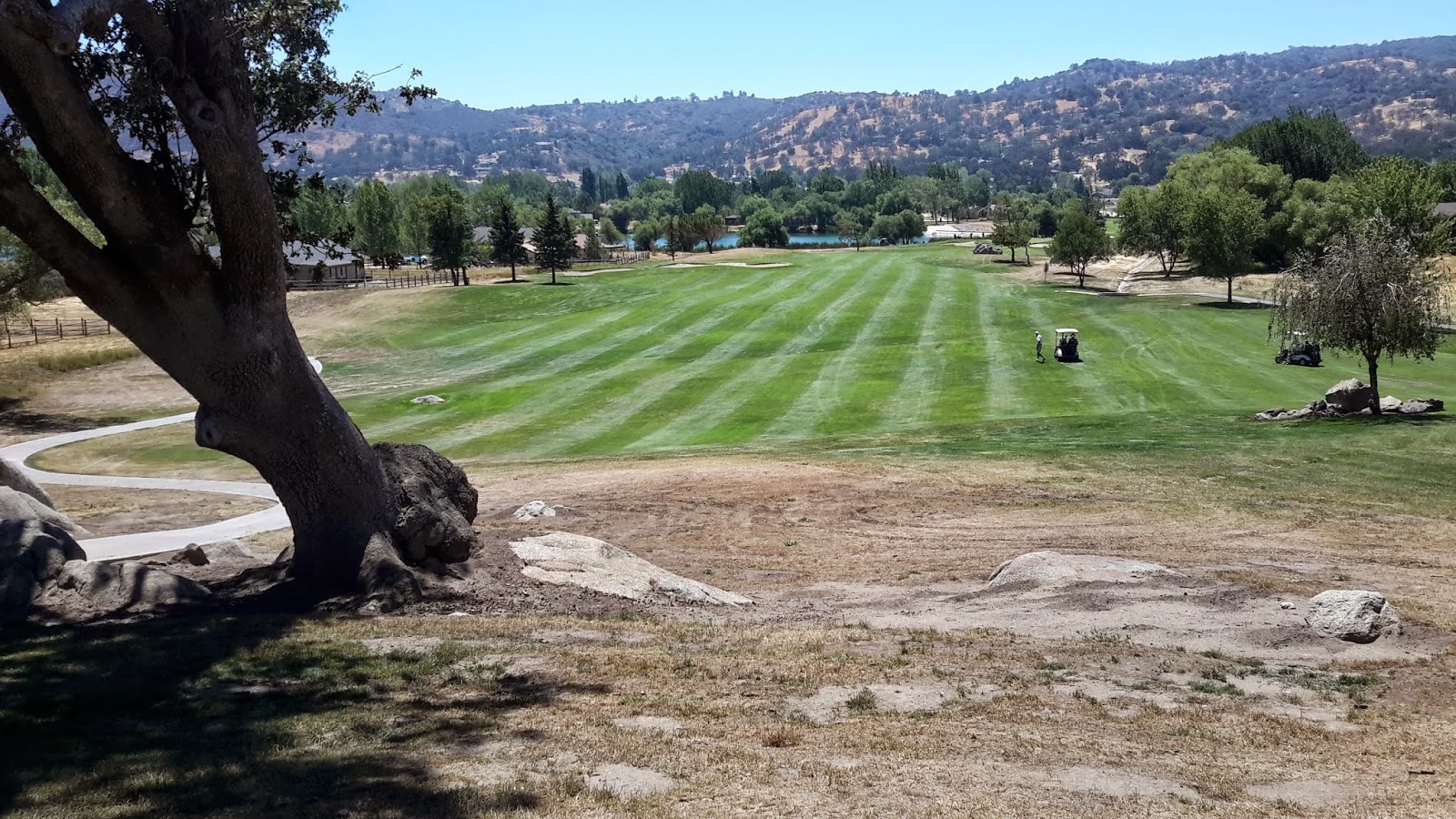
With the anticipation of the continuing California drought, IGM at Bear Valley Springs took proactive measures at the beginning of the season the ensure that there would be sufficient water to sustain the greens, tees and fairways. This included a wide variety of measures as well as modified programs and practices.
 
To spearhead these efforts, Brandon Haynes was given the additional responsibility of Water Wise Manager as we believe it is necessary to have a specific staff member in charge of preventing and scouting for water waste.

Drought conditions don't have to mean poor playability
Results thus far have been terrific. IGM has reduced water use by over 35% for the months of July, August and September. Nearly a 8.5 million gallons savings. And despite the droughty conditions, players have been pleased with conditions. 


Thursday, August 21, 2014

IGM Maintained Brays Island Plantation Featured in Golf Sport Magazine


Most who visit Brays Island Plantation say that it is one of the most unique and memorable places they have ever been. As the Plantation's golf maintenance partner since 2009, IGM has overseen a revival that has the golf course on par with the other high quality amenities available. Read more about this very special "Sporting Haven" at http://www.golfsportmag.com/in-this-issue/.