

Thursday, October 30, 2014
Sometimes We Get Choked Up


Saturday, October 25, 2014
The Value of Root-Pruning

Monday, October 20, 2014
Know your numbers
Strictly Business sponsored by Syngenta
Pick up some knowledge on capital expenditures in this crash course Q&A.
Helen M. Stone | October 2, 2014
Taking care of turf is tough enough without having to worry about any other green on the course. But knowing how to approach a budget helps superintendents get the most out of what they’ve got. We asked Steve Gano, vice president of operations at International Golf Maintenance in Champions Gate, Fla., to help clear up capital expenditures.
What’s a capital expenditure, exactly, and where would we see them on a course budget?
Capital expenditures are outlays for fixed assets – resources which have a long life. In our business a capital expenditure involves a purchase of a new fixed asset, a replacement of a fixed asset or a major overhaul which extends the useful life of a fixed asset. Fixed assets in a golf course maintenance setting include the land, maintenance equipment, the maintenance building, the irrigation system, and even the golf course features such as greens and bunkers.
Can you briefly explain capital expenditure evaluation?
Oftentimes in golf course maintenance, it is as simple as whether or not the cost to repair the equipment, considering downtime, exceeds the cost of replacement over a period of time. As an example, if a mower needs a new engine or hydraulic pump, the repair costs could exceed the equipment cost to a club over the period of a year. Another example pertains to an irrigation system. If an antiquated and unreliable irrigation system poses a risk for turf loss on greens, then at some point, the potential for lost revenue and replacement of the turf outweighs the cost of a new system.
As an alternate example, we’ve had capital expenditures created as a result of upgrading the experience at a course. A simplistic example is the purchase of a green’s roller due to the demand for quicker ball roll.
Can you give us a quick explanation of some of these terms?
Residual/salvage value: Salvage value is the market value of the fixed asset at the end of its useful life. It could be as simple as the value of the metal or the value of the independent parts of the machinery. Residual value: This refers to the amount that a leasing company believes a fleet is worth at the end of the lease term.
Tax considerations: A capital expenditure is spread over the useful life of the fixed asset, and the expense is deducted from the businesses income – resulting in less income tax.
Payback: This is the term in which a course recoups the investment in a fixed asset – return on the investment.
Can you discuss some of the decision making process when it comes to leasing vs purchasing?
For a golf course, it depends on the useful life of the machinery. Mowing equipment and utility vehicles which are used almost daily are oftentimes leased. Cultural equipment with a longer useful life, such as aerators, topdressers and vertical mowers are purchased more often. And, there are different tax considerations when deciding to lease or purchase.
The leasing company owns the equipment at the end of the lease. A superintendent should consider hour limits and residual values when leasing. And, a superintendent should consider the attractive monthly costs of a lease vs. a purchase.
Is there any other information regarding capital expenditures that would be important to a golf course superintendent?
There is a lot to consider when making a large capital investment. Not only should a superintendent consider the cost, the method to pay for it, but also, the service capability of the vendor and/or contractor.
Thursday, October 9, 2014
Drought Conditions in California
 |
| Brandon Haynes |
With the anticipation of the continuing California drought, IGM at Bear Valley Springs took proactive measures at the beginning of the season the ensure that there would be sufficient water to sustain the greens, tees and fairways. This included a wide variety of measures as well as modified programs and practices.
To spearhead these efforts, Brandon Haynes was given the additional responsibility of Water Wise Manager as we believe it is necessary to have a specific staff member in charge of preventing and scouting for water waste.
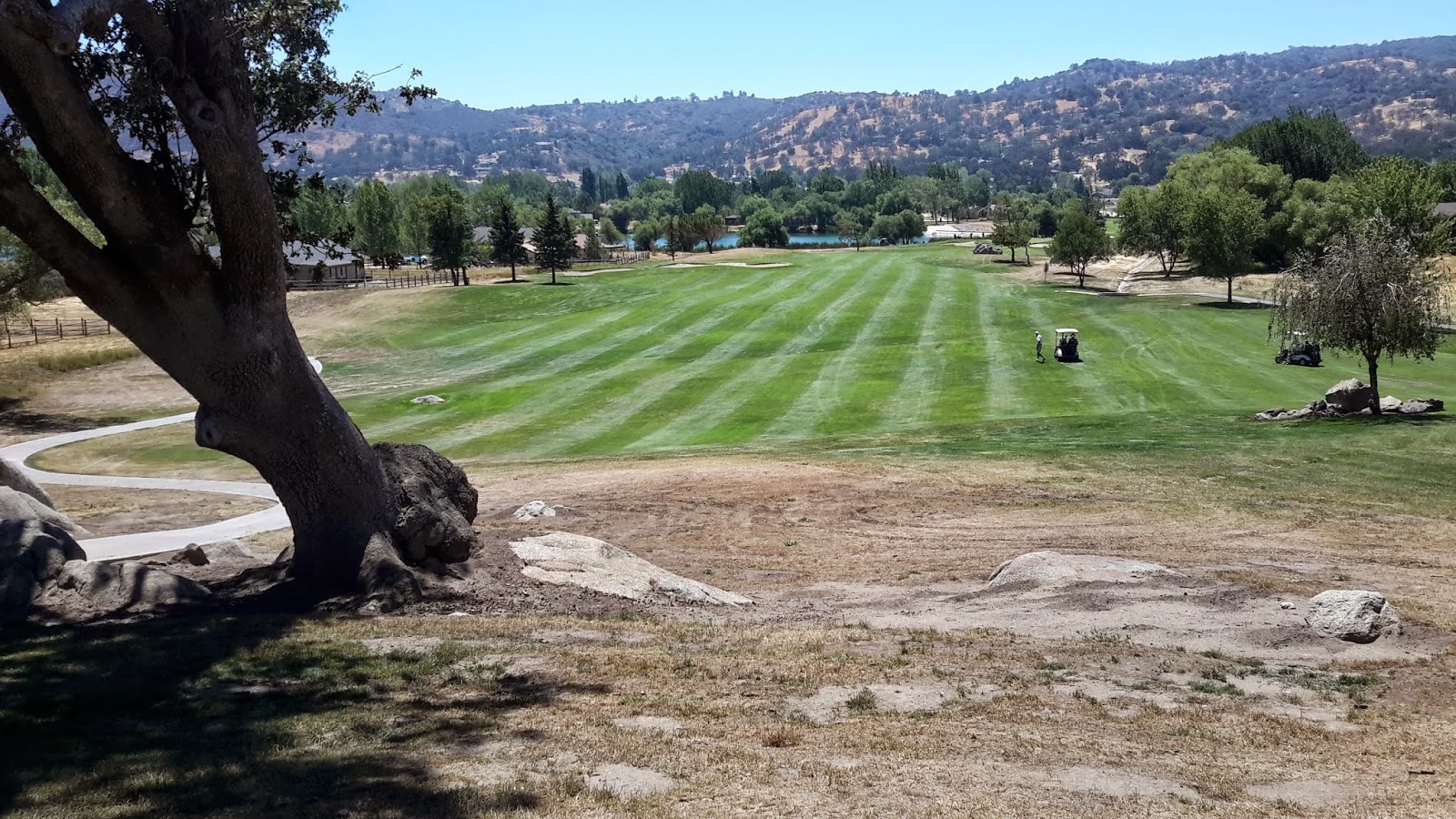 |
| Drought conditions don't have to mean poor playability |
Results thus far have been terrific. IGM has reduced water use by over 35% for the months of July, August and September. Nearly a 8.5 million gallons savings. And despite the droughty conditions, players have been pleased with conditions.
Thursday, August 21, 2014
IGM Maintained Brays Island Plantation Featured in Golf Sport Magazine
 Most who visit Brays Island Plantation say that it is one of the most unique and memorable places they have ever been. As the Plantation's golf maintenance partner since 2009, IGM has overseen a revival that has the golf course on par with the other high quality amenities available. Read more about this very special "Sporting Haven" at http://www.golfsportmag.com/in-this-issue/.
Friday, July 11, 2014
IGM at Savannahs Retains Audubon Certified Status

FOR IMMEDIATE
RELEASE- July 2014
CONTACT: Doug Bechtel, Executive Director
(518)
767-9051, Ext. 114
Savannahs Golf Club Recognized for Environmental
Excellence
MERRITT ISLAND, FL – Savannahs
Golf Club has retained its designation as a "Certified Audubon Cooperative
Sanctuary" through the Audubon Cooperative Sanctuary Program for Golf
Courses, an Audubon International program.
Maurice Miyo, Golf Course Superintendent, led the effort to maintain sanctuary
status on this course and is being recognized for Environmental Stewardship by
Audubon International. Savannahs Golf
Club was designated as a Certified Audubon Cooperative Sanctuary in 2001 and is
one of 901 courses in the world to currently be designated as such.
The Audubon Cooperative
Sanctuary Program for Golf Courses, endorsed by the United States Golf
Association, provides information and guidance to help golf courses preserve
and enhance wildlife habitat, and protect natural resources. Golf courses from
the United States, Africa, Australia, Canada, Central America, Europe, Mexico,
and Southeast Asia have achieved certification in the program.
"Savannahs Golf Club has
shown a strong commitment to its environmental program. They are to be commended for preserving the
natural heritage of the area by protecting the local watershed and providing a
sanctuary for wildlife on the golf course property," said Doug Bechtel,
Executive Director at Audubon International.
"To reach
certification, a course must demonstrate that they are maintaining a high
degree of environmental quality in a number of areas," explained Bechtel. These categories include: Environmental
Planning, Wildlife & Habitat Management, Outreach and Education, Chemical
Use Reduction and Safety, Water Conservation, and Water Quality
Management. Courses go through a
recertification process every two years.
Audubon International is a
501(c)(3) nonprofit organization based in Troy, NY. In addition to golf
courses, Audubon International also provides programs for businesses, schools,
communities, and new developments with the purpose of delivering high-quality
environmental education and facilitating the sustainable management of natural
resources. For more information, call Audubon International at (518) 767-9051or
visit www.auduboninternational.org.
####
Friday, July 4, 2014

Monday, May 26, 2014
Happy Memorial Day

At this time of rememberance we should reflect on the freedoms we share as Americans. Those freedoms are the result of the men and women of the US Armed Forces both past and present. On this day be sure to let those who have served, are serving or families of those who have paid the highest price for our country know how thankful we are for what they do for us.
Thank you from all of us at IGM.
Have a Safe and Happy Memorial Day
Friday, May 2, 2014
IGM Team Turns Out to Support Fore Life Event
 |
|
LT to RT Melanie Mark, Tommy
Joe Coffee,
Paula Pearson-Tucker & Francis Reeves
|
Melanie Mark was thrilled to come out to support the cause,
“Paula Pearson-Tucker is the driving force behind Fore Life and we are proud to
be a part of her efforts.”
Fore Life, Inc. is a not for profit organization that uses
the game of golf and its character building skills to empower vulnerable youth
to help them survive and succeed. For more information and to find out how you
can help, visit http://forelifeinc.org/.
Subscribe to:
Posts (Atom)